

How to Choose Picnic Tables for Parks, Schools & Public Spaces
Buyer’s Guide

How to Choose Picnic Tables for Parks, Schools & Public Spaces

Choosing a picnic table for a public space is not the same as buying one for a backyard. Parks boards, school facilities teams, and municipal buyers need furniture that can handle unsupervised public use, accessibility requirements, long-term durability, and formal procurement standards.

Parks Schools Municipal Buyers Accessible Site Furniture
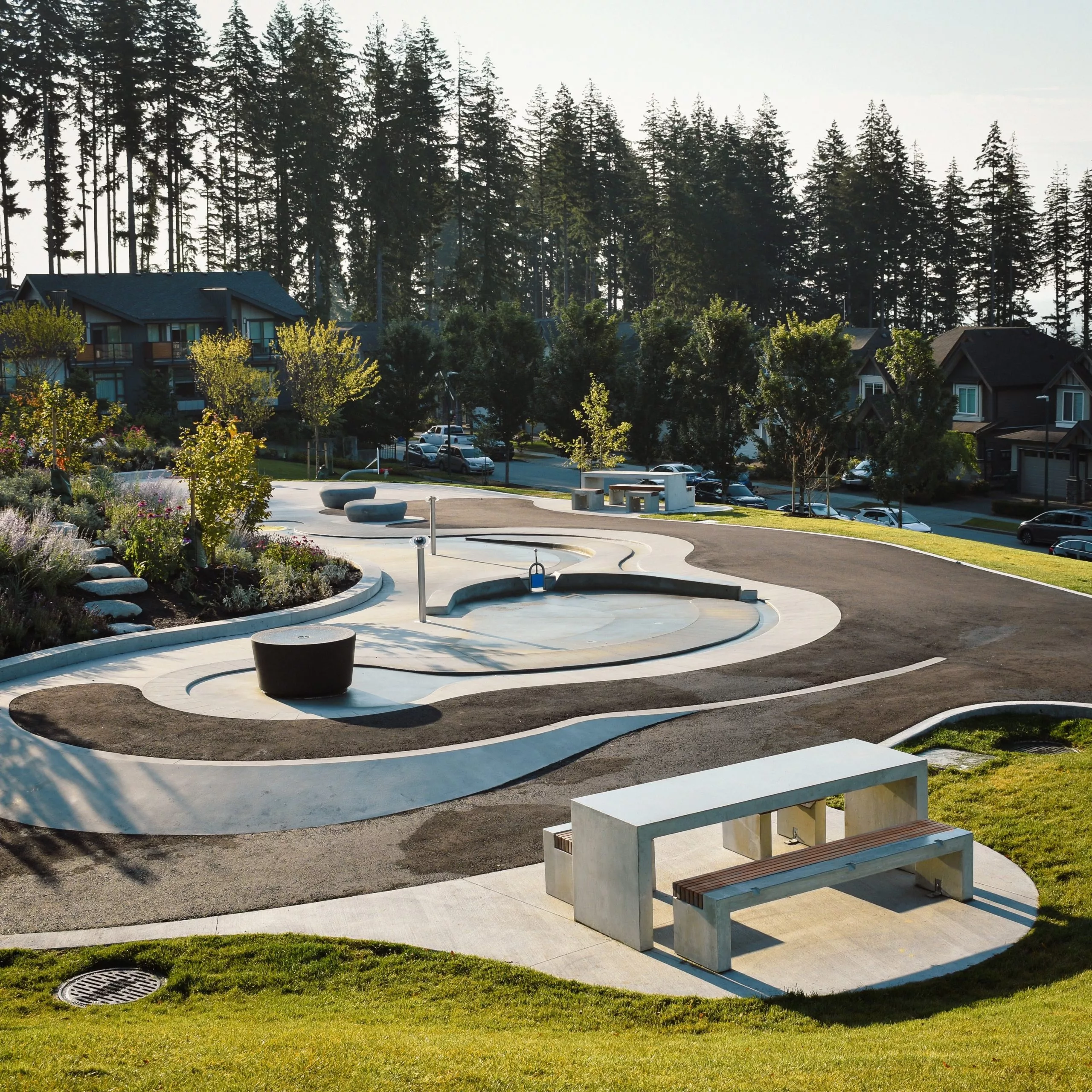
Columbia concrete picnic tables for parks schools and public spaces
Public-Space Specification The right picnic table should match the site, user group, accessibility requirements, maintenance capacity, and expected lifecycle.
01 Exposure Public tables sit outside year-round and must tolerate weather, vandalism, and heavy daily use.
02 Liability Public and institutional sites need accessible, safe, and compliant furniture specifications.
03 Scale Municipalities and school districts often standardize furniture across multiple sites and budget cycles.
Public-Space Buying Criteria

Why Public-Space Furniture Is a Different Buying Decision

Three things separate a public-space picnic table purchase from a residential one: exposure, liability, and scale.

A backyard table may only see occasional use. A park, schoolyard, or civic-space table sits outside year-round, absorbs heavy public traffic, and often needs to perform for years without regular hands-on attention.

  • Exposure A backyard table can be moved, stored, or covered. A public picnic table stays outside through rain, sun, vandalism, moisture, and daily use without a break.
  • Liability Public and institutional buyers carry accessibility and safety obligations that residential buyers do not. A non-compliant table is not just a missed feature — it can become a standards gap during an audit, complaint, or site review.
  • Scale Municipalities and school districts rarely buy one table. They are usually specifying a repeatable standard across multiple sites, which makes consistency, supplier reliability, lifecycle cost, and future replacement planning more important.

This is why public-space furniture should not be selected only by appearance or upfront price. The better question is whether the table fits the site conditions, user group, maintenance reality, accessibility requirements, and long-term procurement plan.

Specification takeaway

The wrong table can create recurring costs through early replacement, repair callouts, accessibility issues, and maintenance work that keeps returning to the budget.
Product Selector

Picnic Table Selection Guide by Site Type

Use this one-page selector to narrow the product direction before requesting pricing. The best table depends on site type, user group, available footprint, accessibility requirements, and desired finish.

Site Type Recommended Direction Why It Fits Check Before Ordering Product Link
General municipal park
Standard park table A familiar picnic-table format works well for general park seating, family use, picnic clusters, and long-term public exposure. Confirm quantity, slab or surface type, delivery access, and whether accessible tables need to be distributed through the area. Columbia Picnic Table
Tight schoolyard or courtyard
Compact footprint Compact pedestal formats help add durable seating without taking over circulation space in schoolyards, courtyards, and smaller outdoor zones. Confirm age range, supervision zones, cleaning frequency, and clear circulation around the table. Pedestal Picnic Table
Accessible picnic area
Accessible configuration Extended or wheelchair-access configurations support more inclusive picnic areas when paired with proper route and surface planning. Confirm clear approach space, firm stable surface, accessible route connection, and distribution across picnic clusters. Pacific Picnic Table
Civic plaza or commercial-adjacent seating
Deli-style table A centralized seating form can work well for plazas, institutional spaces, restaurant-adjacent areas, and compact public gathering zones. Confirm traffic flow, food-service cleaning needs, adjacent pedestrian movement, and desired visual fit. Belcarra Picnic Table
Community space needing a warmer finish
Concrete + cedar Cedar slats add warmth and comfort while retaining the durability and stability of concrete support elements. Confirm maintenance expectations for wood components, exposure level, and whether a warmer visual finish is worth the added care. Columbia with Western Red Cedar Slats
Multi-site municipal or school procurement
Compare full range Multi-site orders may need more than one configuration depending on site size, accessibility needs, and user groups. Confirm standardization goals, replacement matching, delivery phasing, and whether one model can serve all locations. All Picnic Tables
General municipal park Columbia Picnic Table

Standard park-table direction for general public seating, family use, picnic clusters, and long-term outdoor exposure.

View Columbia Picnic Table
Tight schoolyard or courtyard Pedestal Picnic Table

Compact direction for tighter footprints, schoolyards, courtyards, plazas, and smaller outdoor seating areas.

View Pedestal Picnic Table
Accessible picnic area Pacific Picnic Table

Direction for wheelchair-access planning, accessible routes, clear approach space, and distributed accessible seating.

View Pacific Picnic Table
Civic or commercial-adjacent seating Belcarra Picnic Table

Deli-style direction for plazas, institutional spaces, and compact commercial-adjacent seating areas.

View Belcarra Picnic Table
Warmer public-space finish Columbia with Western Red Cedar Slats

Concrete durability with a warmer cedar seating finish for schools, campuses, community spaces, and parks.

View Cedar Slat Option
Multi-site procurement All Picnic Tables

Best starting point when comparing multiple table configurations for parks, schools, campuses, and public spaces.

View All Picnic Tables
How to use this selector Choose the model after the site conditions are clear.

For most public projects, the first decision is not the table model. The first decision is the site requirement: traffic level, footprint, accessibility, surface preparation, maintenance capacity, and delivery logistics. Use the table above to narrow the direction, then confirm the final model, finish, and quantity with the project requirements.

Site-Based Specification

Match the Table to the Site, Not the Other Way Around

The single biggest mistake in public-space furniture procurement is specifying one table type across every site type. Parks, schools, and civic spaces may all need durable seating, but they do not fail in the same way.

A municipal park usually faces vandalism, weather exposure, and heavy public traffic. A schoolyard needs easy-clean, tamper-resistant furniture that can handle daily use. A civic plaza needs accessibility, visual fit, and consistency across the broader public realm.

Start with the site condition. Before choosing a model, identify the primary risk: vandalism, maintenance pressure, accessibility exposure, space constraints, or long-term procurement consistency. The right table specification should solve the site’s highest-risk problem first.
Comparison Framework How different public spaces affect picnic table selection
Site Type Primary Risk What to Prioritize
Municipal parks Vandalism, weather exposure, and high foot traffic. Structural durability, vandal resistance, and a 20+ year service life.
Schools & campuses Constant daily use and unsupervised after-hours access. Low-maintenance surfaces, accessibility compliance, and tamper resistance.
Public / civic spaces Mixed-use crowds and accessibility liability exposure. Accessible configurations, aesthetic fit, and procurement consistency.

Municipal parks

Primary risk Vandalism, weather exposure, and high foot traffic.
Prioritize Structural durability, vandal resistance, and a 20+ year service life.

Schools & campuses

Primary risk Constant daily use and unsupervised after-hours access.
Prioritize Low-maintenance surfaces, accessibility compliance, and tamper resistance.

Public / civic spaces

Primary risk Mixed-use crowds and accessibility liability exposure.
Prioritize Accessible configurations, aesthetic fit, and procurement consistency.
Park Picnic Tables

For Parks: Built for Decades, Not Seasons

Municipal and provincial parks put picnic tables through one of the hardest public-space use cases: unsupervised access, wet or coastal exposure, heavy visitor traffic, and a maintenance budget that often cannot absorb annual repairs.

This is where precast concrete becomes more than a material preference. For park applications, the specification should prioritize structural durability, vandal resistance, low maintenance, and long-term placement over short-term upfront savings.

  • 01
    Long structural lifespan Park furniture should be selected for a 20–30+ year horizon, not a short replacement cycle. Reinforced precast concrete is suited to permanent outdoor placement.
  • 02
    Weight and stability In exposed or waterfront locations, a heavy table helps reduce movement, theft risk, tipping, and recurring maintenance calls.
  • 03
    Cleaning without annual refinishing Public tables should tolerate pressure-washing and routine cleaning without depending on seasonal sealing, staining, or plank replacement cycles.
  • 04
    Accessible picnic areas At least one accessible configuration should be planned within each picnic cluster and distributed through the site instead of isolated in one location.
Placement matters as much as the table itself.

Parks boards should leave clear circulation between tables for wheelchairs, strollers, and general foot traffic. Where possible, place some tables near amenities such as washrooms, water fountains, shelters, waste receptacles, and shaded areas instead of arranging every table in a rigid grid.

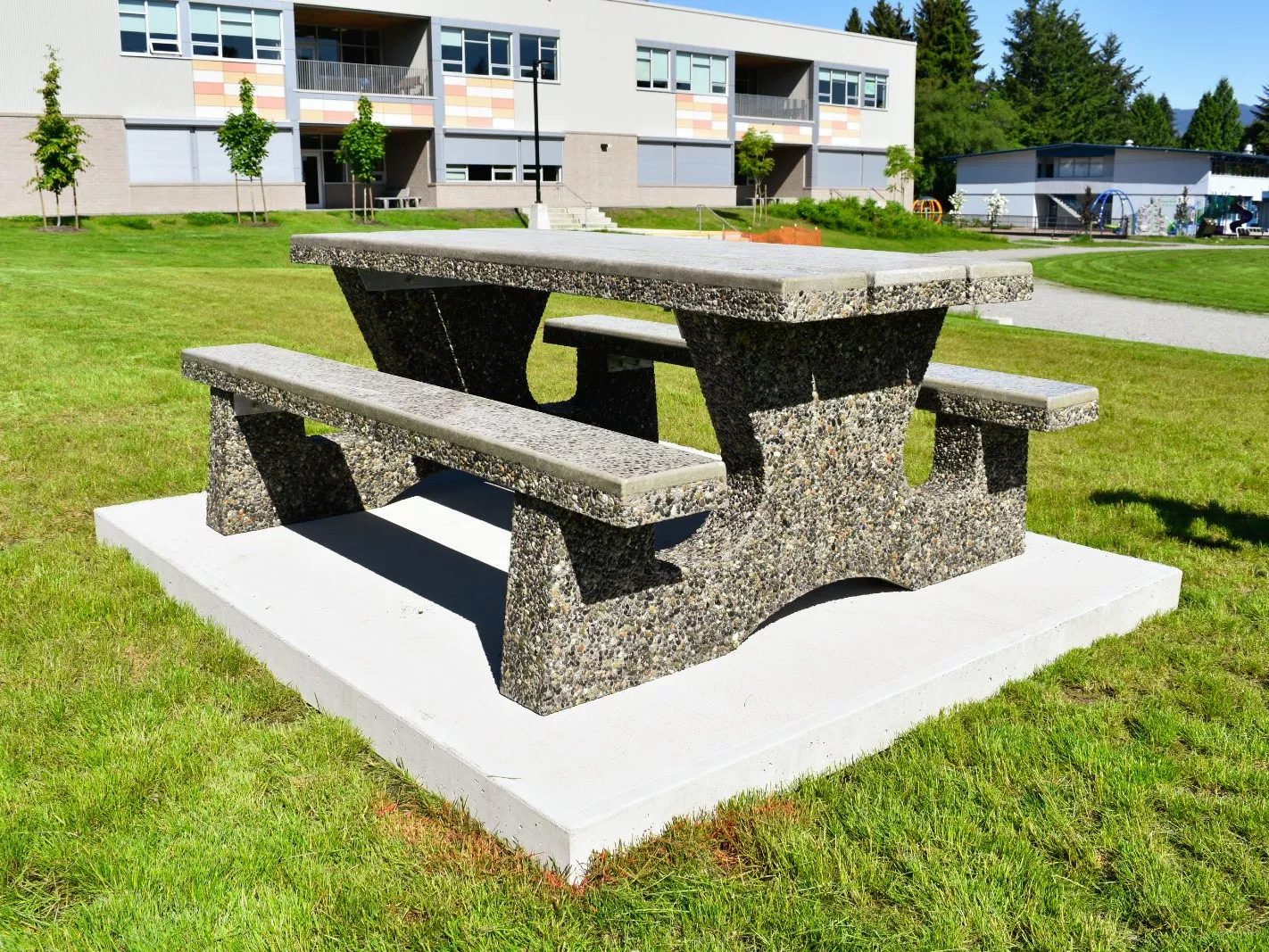
Columbia precast concrete picnic table on a concrete slab for school and public space use
Schoolyard Planning Daily-use furniture needs to stay functional through the school year.
School Picnic Tables

For Schools: Daily Use, Zero Downtime Tolerance

School picnic tables face a different wear pattern than park furniture. During the school year, they can see constant daily use for lunches, outdoor learning, breaks, assemblies, and after-school activity. Then they may sit exposed and unsupervised through evenings, weekends, summer, and holiday breaks.

Facilities managers need tables that tolerate that cycle without needing mid-year repairs. Once a table is damaged, unstable, difficult to clean, or no longer safe for students, it often cannot wait for the next scheduled maintenance window.

For schools, the specification should prioritize tamper resistance, easy cleaning, compact layout options, and consistency across the district. Compact layouts are especially important for tighter schoolyard footprints, where products such as the Pedestal Picnic Table can help create durable seating without taking over circulation space.

Age Range Matters One school site may need more than one table configuration.

Elementary schoolyards often benefit from lower, more compact table configurations that fit tighter play-zone footprints and younger users. Secondary schools and campuses can usually specify standard-length tables sized for older students, staff, and mixed-use outdoor areas. Where a school serves a wide age range, mixing configurations across the site is usually stronger than forcing one table size into every location.

Accessibility & Civic Spaces

For Accessible & Public Civic Spaces: Compliance Isn’t Optional

Any picnic table specified for a public park, school, or civic site in Canada should be evaluated against Canadian accessibility requirements. The goal is not only to choose a durable table, but to make sure the table, surrounding surface, route, and placement work together as part of an accessible public space.

In practical terms, this means accessible tables should not be isolated in one location. They should be distributed throughout a picnic area so users have comparable choices across the site. Today, Sanderson’s Columbia Picnic Table and Pacific Picnic Table product pages list wheelchair-access configurations directly.

Planning Warning Accessibility does not stop at the table order.

A table can be designed for wheelchair access, but the surrounding ground surface, route connection, and final placement still determine whether the installation works in practice.

  • 1
    Wheelchair seating space Use cantilevered or extended tabletop ends that provide usable wheelchair seating space at the table.
  • 2
    Knee and toe clearance Confirm that the selected configuration provides the required clearance for accessible use.
  • 3
    Distributed accessible seating Plan at least one accessible table per picnic cluster and avoid grouping all accessible units in one isolated area.
  • 4
    Firm and stable ground surface Coordinate the table placement with a firm, stable, slip-resistant surface and an accessible route before delivery.
Material Comparison

Concrete, Wood, Metal, and Recycled Plastic: How Each Material Performs

Concrete is not the only material public buyers consider. The stronger specification comes from matching the material to the site’s traffic, maintenance capacity, climate exposure, vandalism risk, and expected service life.

02

Wood

Durability 5–10 years before major repair or replacement.
Maintenance High — sealing, staining, and plank replacement.
Best Fit Lower-traffic sites where natural aesthetic is the main priority.
03

Steel / Aluminum

Durability 10–20 years; corrosion risk increases near coastal environments.
Maintenance Moderate — recoating and rust-spot repair may be required.
Best Fit Budget-conscious inland sites with lower corrosion exposure.
04

Recycled Plastic

Durability 15–25 years; will not rot or splinter.
Maintenance Low, but structural rigidity can be limited for heavy-duty public use.
Best Fit Moderate-traffic sites, playgrounds, and lower-impact public areas.
Specification takeaway Material choice should follow risk, not preference.

For most municipal and school buyers, the decision narrows quickly once vandalism exposure and total cost of ownership enter the picture. That is why precast concrete is often the stronger specification for high-traffic public sites.

Capacity & Configuration

Narrow the Table by Seating, Footprint, Accessibility, and Finish

Once the site type is clear, the next step is choosing the right configuration. For public projects, that usually means balancing group size, available footprint, accessibility requirements, finish durability, and maintenance capacity.

Pedestal Tables

Round or square pedestal tables work well where the available footprint is limited and the design needs to stay compact.

  • Tight schoolyards and playground-adjacent spaces
  • Small plazas, courtyards, and rest areas
  • Sites needing flexible seating around compact tables

Wheelchair-access configurations use extended or cantilevered tabletop ends to support accessible seating within the picnic area.

  • Public parks and civic spaces with accessibility requirements
  • Schools, campuses, and institutional outdoor areas
  • Picnic clusters where accessible seating should be distributed

Deli-style Belcarra tables create a distinct public-space silhouette for institutional, civic, and restaurant-adjacent areas.

  • Institutional outdoor seating zones
  • Restaurant-adjacent public spaces and commercial patios
  • Sites that need a more compact, centralized seating form
Finish selection Finish affects maintenance, comfort, and visual fit.
Smooth or polished concrete Clean, modern, and generally easiest to wipe down or wash. Strong fit for schools and food-heavy public areas.
Exposed aggregate Adds texture and visual connection to landscape settings, especially in parks, waterfronts, and recreation areas.
Western Red Cedar slats Adds warmth for schools, plazas, campuses, and community spaces while retaining durable concrete support elements.
Game or specialty tops Integrated chessboards or specialty surfaces can support family parks, recreation areas, and longer dwell-time public spaces.
Product range Use the full range when comparing configurations.

For broader comparison across Sanderson’s picnic table lineup, refer to the full picnic tables hub , which includes Columbia, Pacific, Pedestal, Belcarra, Harvest, cedar hybrid, accessible, and project-specific configurations.

Budgeting & Procurement

Budgeting and the Procurement Process

Public-sector picnic table purchases usually move through a more structured process than a simple retail order. Parks boards, schools, and municipal teams often need to confirm budget authority, site count, accessibility requirements, delivery timing, and installation conditions before a purchase order can move forward.

The stronger approach is to treat picnic tables as a site-furnishing specification, not a one-off product order. That keeps the decision tied to total table count, site distribution, accessibility requirements, delivery format, and long-term standardization.

  1. Scope the full project first Confirm total table count, site distribution, user groups, and accessibility requirements across all locations before comparing product options.
  2. Confirm budget authority Determine whether the purchase requires a formal RFP, tender, board approval, or whether it falls under a direct-purchase threshold.
  3. Check supplier capacity and timing Match supplier manufacturing capacity and delivery timelines to the installation window, especially when ordering for multiple sites.
  4. Keep accessibility documentation in the file Confirm that accessible configurations and site-planning assumptions are documented clearly for procurement, facilities, or accessibility review.
  5. Confirm delivery format Fully assembled tables can reduce on-site assembly labour and help avoid installation errors, but the site still needs suitable access for offloading and placement.
  6. Plan site prep before delivery Coordinate footings, ground surface, slab preparation, accessible routes, and final placement before the tables arrive on site.
Budget planning note Order quantity affects the unit economics.

Precast manufacturing has setup costs tied to production runs, so multi-site orders placed together often price more efficiently than the same tables ordered separately across different budget cycles.

Delivery and Procurement Logistics

Delivery planning matters because precast picnic tables are heavy and site access can affect the installation sequence. Sanderson Concrete delivers tables fully assembled within 100 km of the Surrey, BC plant. Beyond that radius, freight, offloading equipment, and site access should be confirmed before the order is finalized.

For parks boards and school districts managing multiple locations, standardizing on one table line across a procurement cycle can simplify maintenance, replacement matching, and future expansion. The Sanderson Concrete picnic tables hub is the best internal reference point when comparing available models, configurations, and related table styles.

For single-site projects Focus on exact placement, surface preparation, accessibility route, and delivery access before confirming the final configuration.
For multi-site procurement Standardize models where possible, consolidate quantities, and align delivery timing with site readiness across all locations.
Frequently Asked Questions

Picnic Tables for Parks, Schools, and Public Spaces: FAQ

These are common questions from parks boards, school facilities teams, municipal buyers, and project managers when specifying durable outdoor picnic tables for public-use environments.

How many picnic tables should a park provide per picnic area?

There is no single ratio. It depends on expected visitor volume, site layout, shade, access routes, and nearby amenities. Most parks boards plan enough tables to avoid overcrowding at peak weekend use, while keeping at least one accessible table per cluster and distributing accessible units throughout the picnic area.

Do school picnic tables need to be different from park tables?

The durability requirements overlap, but schools usually benefit from more compact, tamper-resistant configurations sized for schoolyard footprints and age-appropriate seating. Parks tend to prioritize maximum weather resistance, vandal resistance, and long-term public exposure.

What accessibility standard applies to picnic tables in Canada?

Canadian public spaces should be evaluated against Canadian accessibility requirements, including CSA/ASC B651 and CAN-ASC-2.1 outdoor spaces guidance. The U.S. ADA standard does not govern Canadian public spaces, so Canadian projects should confirm requirements based on the applicable local and national standards.

Is precast concrete more expensive than wood or metal picnic tables?

Precast concrete usually has a higher upfront cost than standard wood tables, but it can be lower over the full lifecycle for high-traffic public spaces. Wood often requires sealing, staining, plank replacement, and earlier replacement. Metal can also require corrosion maintenance, especially in coastal environments.

Can picnic tables be customized for a school or municipal logo?

Yes. Customization can include cast-in logos, custom colour blends, specialty finishes, integrated game boards, and project-specific configurations. These options are usually priced in addition to the base table cost and should be discussed early in the specification process.

What is the best picnic table material for high-traffic public spaces?

For high-traffic parks, schools, waterfronts, and unsupervised civic areas, precast concrete is often the strongest option because it resists weather, vandalism, moisture, and frequent public use better than many lighter-duty alternatives.

Specification note The right answer depends on the site, not only the table.

Before finalizing a picnic table order, confirm expected traffic, accessibility requirements, delivery access, surface preparation, and long-term maintenance capacity.

Final Checklist

Before You Specify Picnic Tables, Confirm These Details

The best picnic table choice is usually not the cheapest option or the most decorative option. It is the product that fits the site conditions, user group, accessibility requirements, maintenance capacity, and expected lifecycle.

Before finalizing a model, use this checklist to keep the decision tied to the actual project conditions.

01 Site type and exposure

Confirm whether the tables are going into a municipal park, school, civic plaza, campus, waterfront, trailhead, or mixed-use public space.

02 User group and seating capacity

Match table size to the expected users: children, families, students, staff, park visitors, seniors, or mixed public groups.

03 Accessibility requirements

Plan wheelchair-access configurations, clear approach space, accessible routes, and firm stable surfaces before ordering.

04 Surface and installation conditions

Confirm whether the table will sit on concrete, asphalt, compacted aggregate, pavers, or another prepared surface.

05 Finish and maintenance expectations

Choose a finish that matches cleaning frequency, food-service use, vandalism exposure, weather, and the desired visual fit.

06 Procurement and delivery logistics

Confirm quantity, production timing, delivery access, offloading requirements, and whether the order covers one site or multiple sites.

Practical takeaway Choose the table after the site plan is clear.

A compact schoolyard may point toward a pedestal configuration. A general park picnic area may need standard Columbia-style tables. A civic site with accessibility requirements may need extended or wheelchair-access configurations. The right model should follow the site plan, not the other way around.