
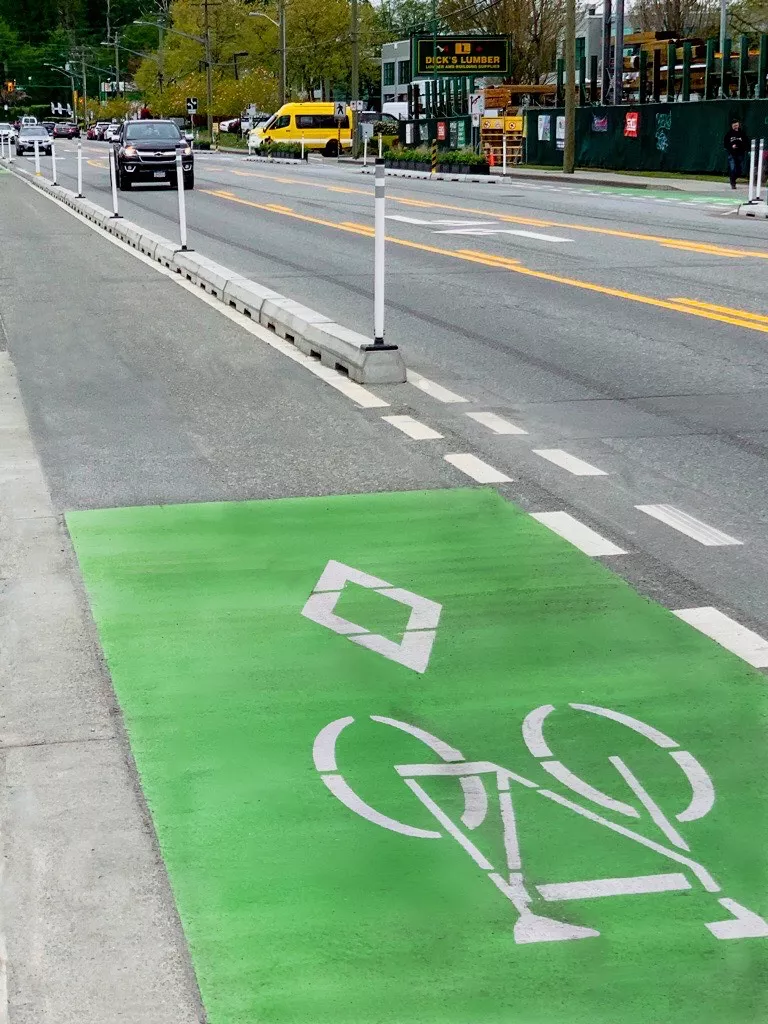
Painted Lane Markings
Best used as a visual guide, not as a protective barrier.
- No physical separation from vehicles
- Can fade under weather and traffic exposure
- Requires ongoing repainting and maintenance
- Limited deterrence against vehicle intrusion
Rebar-reinforced precast concrete dividers designed for protected bike lanes, traffic separation, curb extensions, and permanent cycling infrastructure.
Bike lane safety depends on physical separation, visibility, durability, and long-term maintenance planning. Precast concrete bike lane barriers give municipalities and contractors a stronger alternative to painted lines or temporary plastic delineators.
Painted bike lanes can guide movement, but they do not physically separate cyclists from vehicles. Flexible delineators improve visibility, but they can be displaced, damaged, or replaced frequently in high-traffic environments.
Sanderson’s precast concrete bike lane barriers provide a more durable separation system for protected bike lanes, curb extensions, road diets, and municipal active transportation projects. The units are engineered for repeatable installation, long service life, and practical maintenance access.
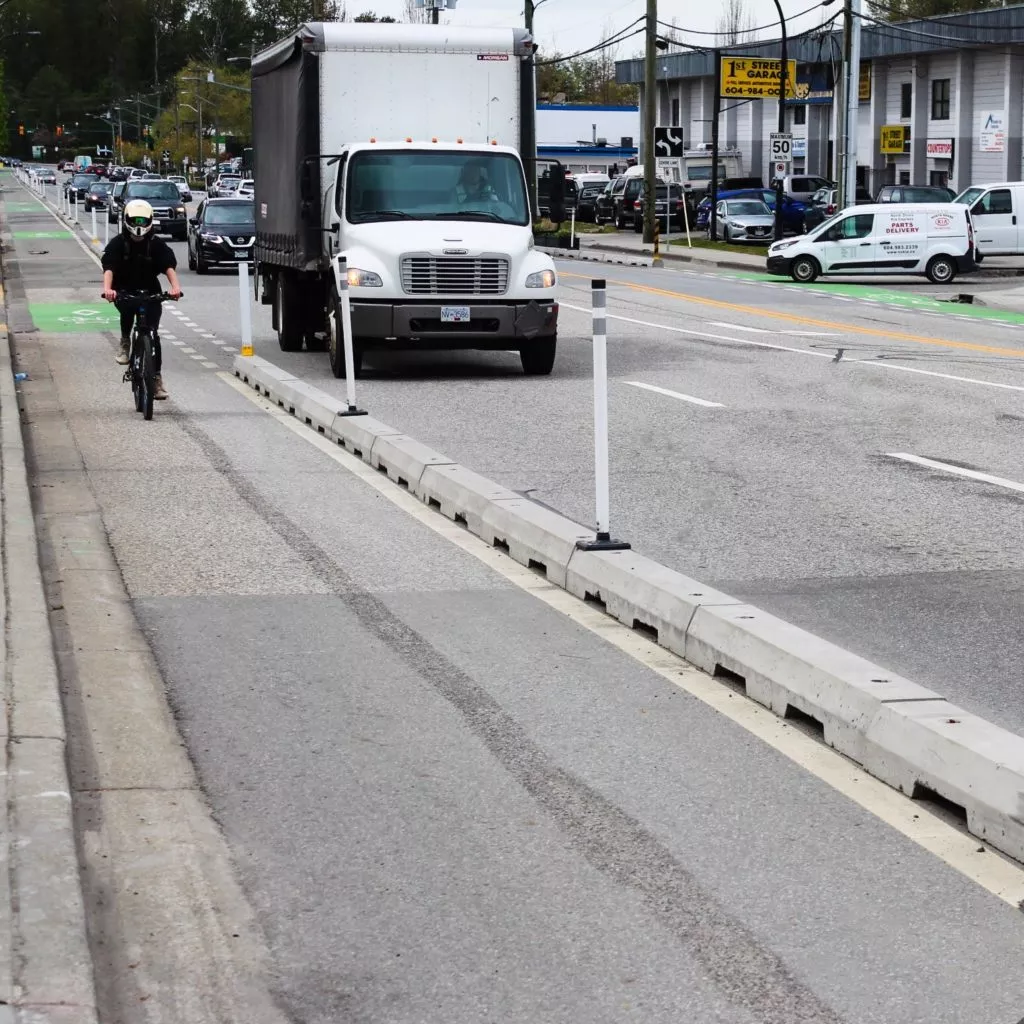
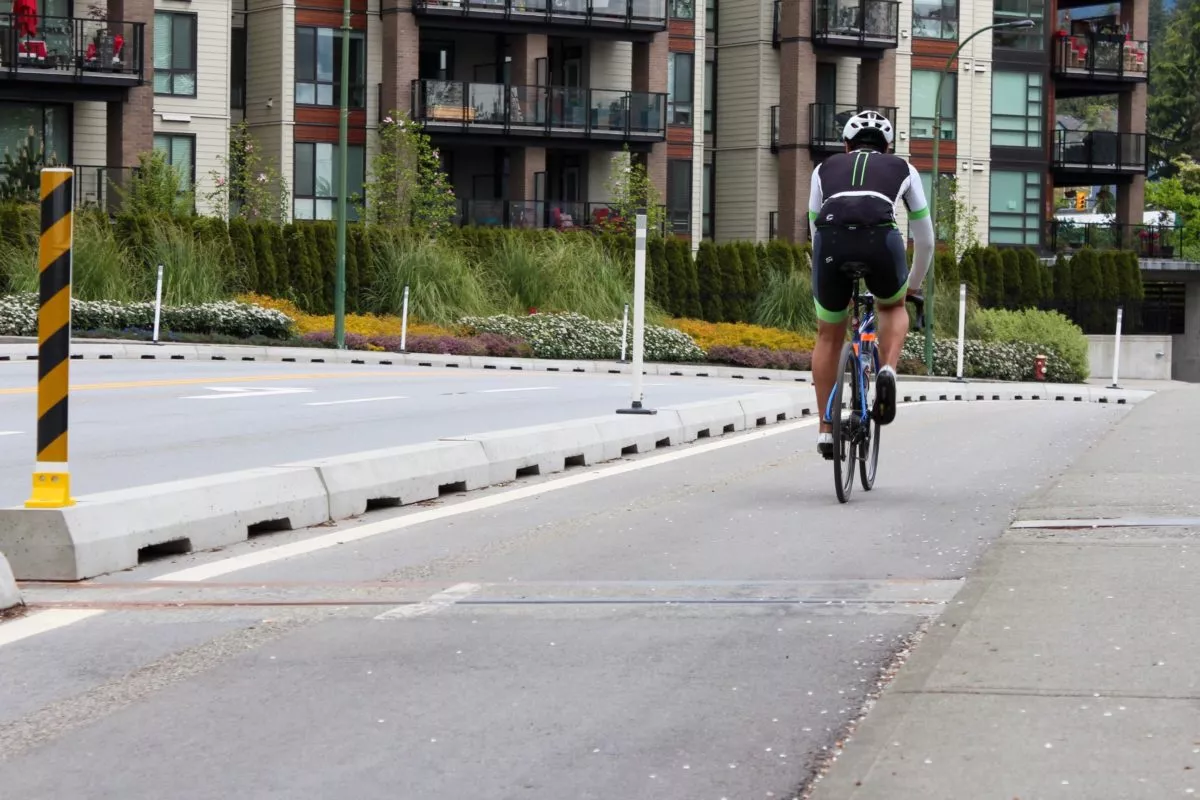
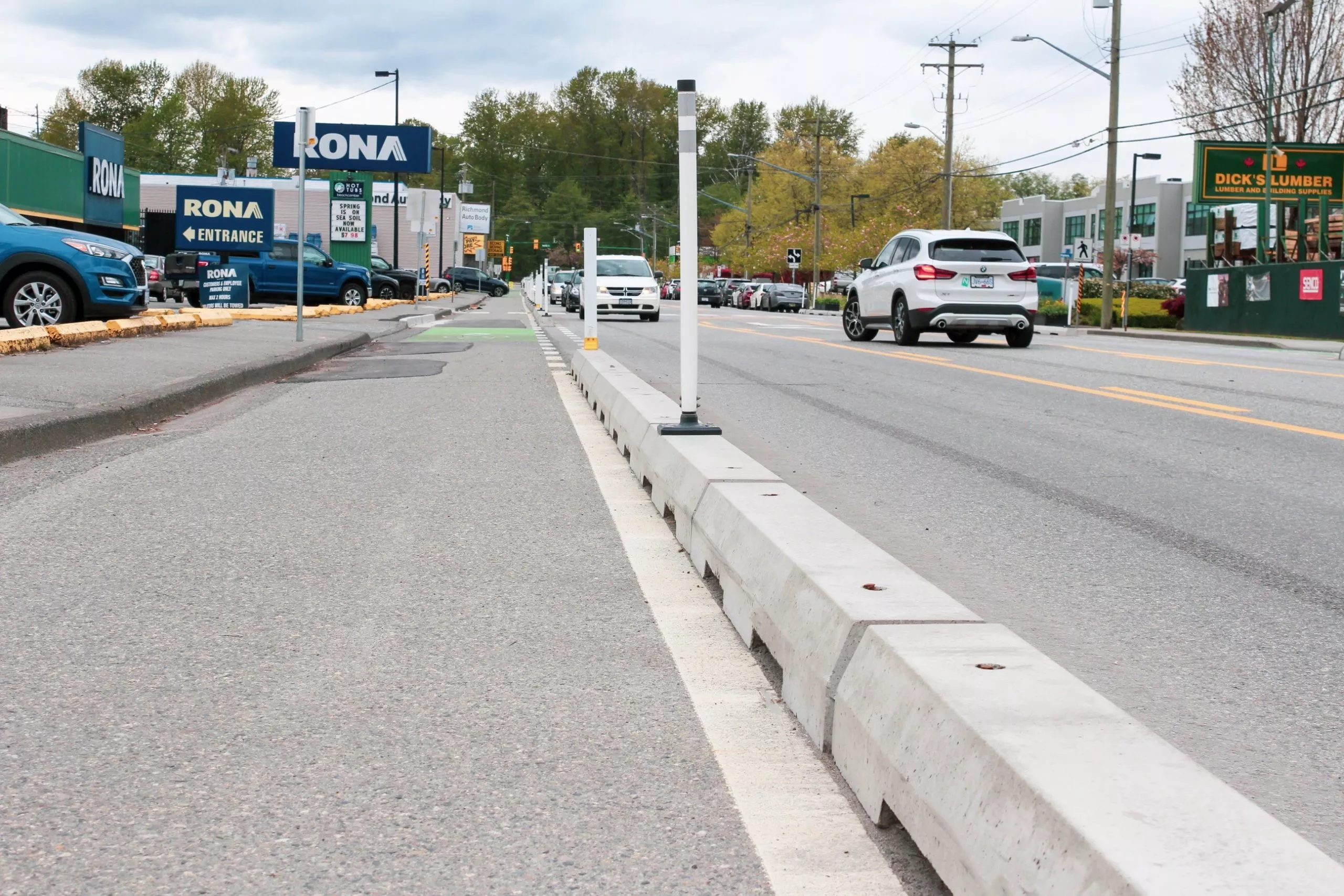
Creates a clear, durable buffer between vehicle lanes and cycling routes.
Designed for public roads, repeated exposure, and demanding urban conditions.
Can support different project requirements, including surface-mount configurations.
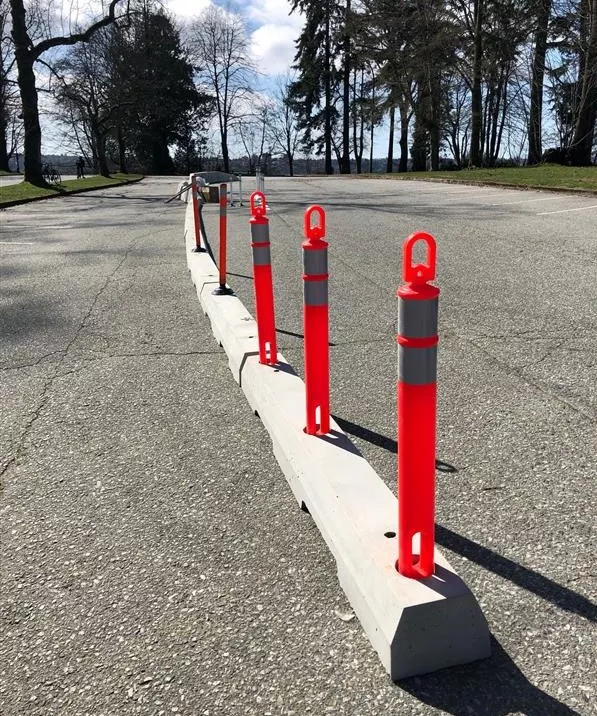
Compatible with reflective delineator posts for stronger nighttime and driver visibility.
Infrastructure Excellence · North Vancouver, BC
The best option depends on project duration, safety expectations, maintenance budget, and the level of physical separation required.
Best used as a visual guide, not as a protective barrier.
Useful for visibility, but less effective as a durable physical separator.
Stronger separation for permanent protected bike lanes and municipal corridors.
Standard precast curb dimensions with project-specific options for colour, anchoring, delineator post mounting, and custom road configurations.
Use these standard dimensions and product options as a starting point for municipal, contractor, and civil infrastructure planning.
Choose the mounting method based on project schedule, appearance requirements, maintenance access, and whether the lane is permanent or phased.
The delineator socket is formed directly into the curb during production. This creates a cleaner finished appearance and removes the need for exposed surface hardware.
A delineator bracket is installed on the top face of the curb on-site. This gives project teams more flexibility for phased installations, replacements, or spacing changes.
Send Sanderson Concrete your project details and our team can help review product fit, dimensions, installation requirements, and next steps for quoting.
Use these answers to understand the product before requesting technical details or pricing.
Concrete bike lane barriers are used to create physical separation between cyclists and vehicle traffic. They are commonly specified for protected bike lanes, road diets, curb extensions, municipal streetscapes, and active transportation corridors.
The standard high-profile precast concrete bike lane barrier is 96 inches long, 12 inches wide, and 8 inches high. Custom sizes may be available depending on project requirements.
Yes. Delineator posts can be integrated using cast-in sockets or surface-mounted brackets. The best option depends on the project timeline, appearance requirements, and maintenance preferences.
In many project conditions, precast concrete barriers can be removed and reused if the street layout changes. Relocation depends on anchoring method, site conditions, and installation details.
Yes. Standard grey concrete is available, and integral colour options can be reviewed for projects that require specific streetscape, branding, or visibility requirements.
Send the project location, estimated quantity, road drawings or layout, preferred delineator post option, colour requirements, anchoring needs, and target timeline. This helps Sanderson review the project faster.
Bike lane barriers are often specified alongside other precast products for traffic control, site protection, drainage, hardscape design, and public-space infrastructure.
High-profile concrete curbs, parking blocks, and wheel stops support commercial lots, parkades, municipal sites, industrial yards, and traffic separation projects.
Precast bollards for traffic control, pedestrian protection, perimeter definition, public-space safety, and commercial site planning.
Utility and drainage precast components for civil works, site servicing, stormwater management, and infrastructure projects.
Durable precast concrete pavers and slabs for public spaces, plazas, pedestrian areas, landscape design, and exterior surfaces.
Heavy-duty precast furniture systems for parks, plazas, campuses, commercial landscapes, courtyards, and shared outdoor spaces.
Long-lasting precast washroom buildings for parks, recreation areas, public facilities, trail networks, and municipal amenities.
Made-to-spec precast concrete for custom site elements, public art, architectural features, signage, wall panels, and complex project needs.
Sanderson’s precast concrete bike lane barriers are designed for projects where safety, durability, visibility, and long-term public infrastructure performance matter.
Use precast concrete barriers to create a physical buffer between cyclists and vehicle lanes on permanent or upgraded cycling corridors.
Define vehicle movement, reduce lane intrusion, and improve visual organization in areas where painted markings alone are not enough.
Support road reconfiguration projects where cities are reallocating street space for active transportation, traffic calming, and safer public access.
Use relocatable precast barriers for phased street improvements, pilot bike lanes, and projects that may need future adjustment.
Review installed examples showing how precast concrete bike lane barriers support protected cycling routes, traffic separation, delineator visibility, and municipal street upgrades.
This product works best when the project requires a visible, durable, and physical bike lane separator that can be installed with repeatable spacing and adapted to site conditions.
For city streets, public corridors, traffic-calming routes, and active transportation upgrades.
For areas where cyclist and pedestrian safety needs stronger physical separation.
For projects adding cycling infrastructure to dense commercial, residential, or mixed-use areas.
For non-standard layouts requiring custom lengths, colours, anchoring, or post configurations.
Send lane drawings, dimensions, delivery location, and preferred installation requirements.
Confirm dimensions, mounting method, colour, delineator post needs, and quantity.
Receive pricing, production guidance, and next steps for ordering or project coordination.